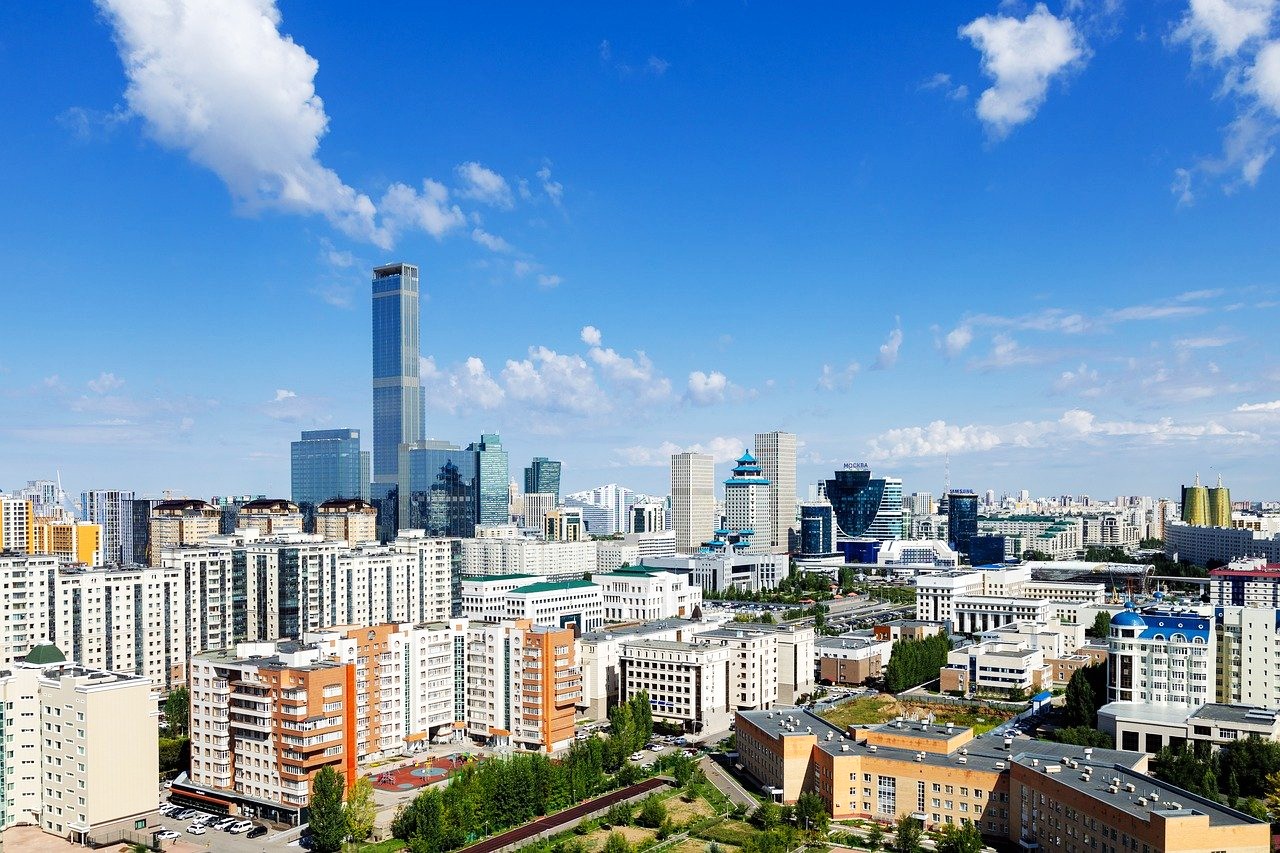
Astana is the capital of Kazakhstan. Its earlier names were Akmolinsk, Tselinograd (1961), Akmola (1992), and Astana (1998). From 2019 to 2022, the city was called Nur-Sultan, and in 2022 the name Astana was restored.
The location of the city is strategically favorable; It was an area at a crossroads that attracted the people of the Steppe from ancient times. Archaeologists find artifacts in the city dating from the Bronze Age, the early Iron Age, and the Middle Ages. One of the major historical sites near the city is the Bozok settlement, a monument that functioned from the early Middle Ages (VII - VIII centuries) till the epoch of the Kazakh Khanate (XV - XVI centuries).
Astana was the main railway station of North Kazakhstan. It is located along the Ishim River, and enterprises of the agricultural engineering industry and chemical factories are located in Astana. Today, it is a modern city with many green streets and high-rise buildings, but it is exposed to strong steppe winds. The city has a diverse population, with ethnic Kazakhs (84.1%), Russians (8.3%), Ukrainians (1.3%), Tatars (1%), Germans (0.8%), Uzbeks (0.6%), and others (3.6%). Higher education institutions include the L.N. Gumilyov Eurasian National University and Nazarbayev University. Three museums and two drama theaters function in the city. The construction of the National Library, National Museum, Art Gallery of Modern Art, Center of Social and Economic Technologies, Business Center, Children's Park, water park, and cultural and health institutions has been carried out or is continuing in the capital. Today Astana is a large city, with an area of about 800 square kilometers. In 1999, Astana, according to a UNESCO resolution, received the status of “City of Peace”. After gaining capital status and the establishment of the special economic zone “Astana – a New City,” many modern architectural and town planning projects were realized.
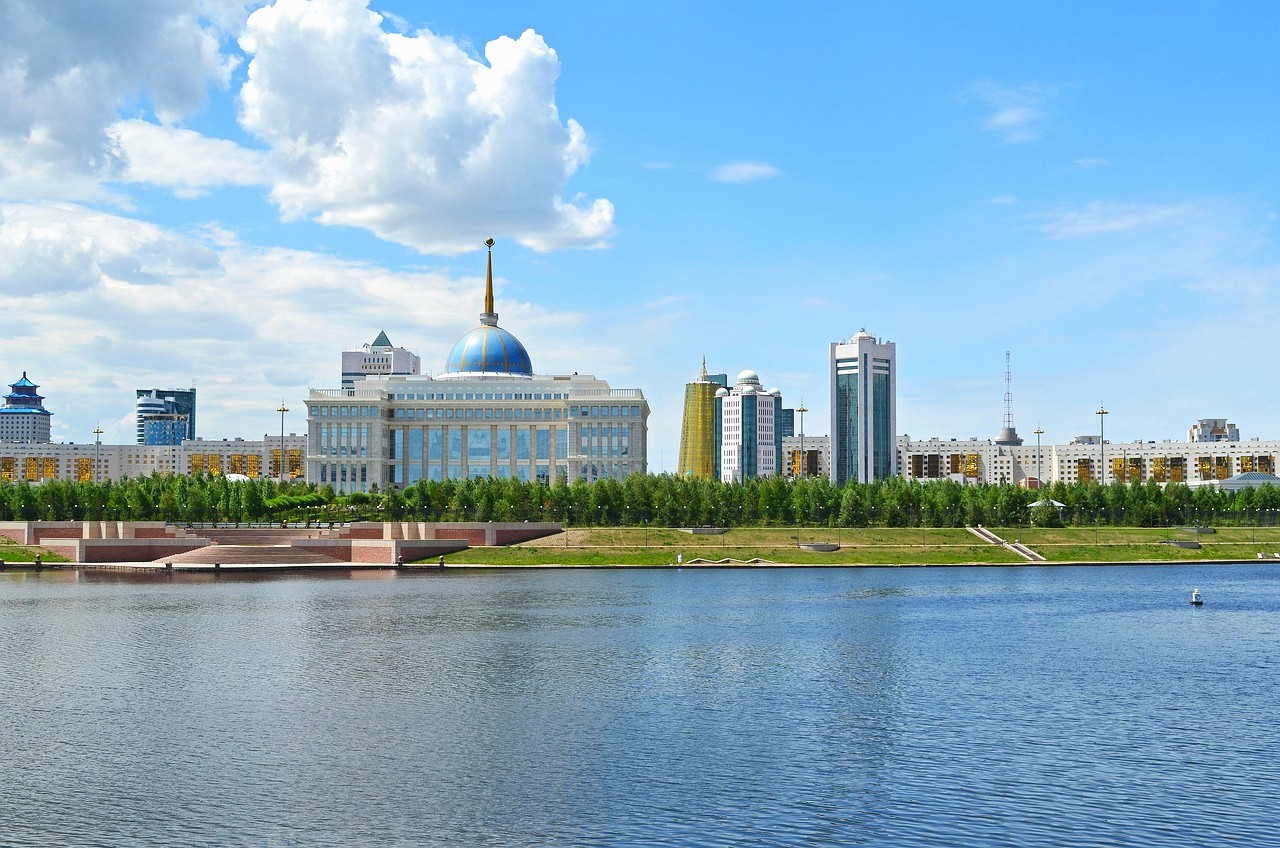
The Congress Hall, Palace of Youth, and Presidential Culture Center can also be referred to as cultural and educational institutions. The Ak Orda is the residence of the President of the Republic of Kazakhstan. It is located on the left bank of the Ishim River in the capital of Kazakhstan, Astana, at the beginning of Water-Green Boulevard, 300 meters from the Bayterek monument. The total building area is 36,720 square meters. The official presentation of a new Palace of the President of the Republic of Kazakhstan was held on the 24th of December, 2004. Next to the residence are the Parliament of Kazakhstan, the House of Government of the Republic of Kazakhstan, the Supreme Court of the Republic of Kazakhstan, and the House of Ministries of Kazakhstan. The Ak Orda is depicted on the banknote of 10 000 tenge.
Bayterek is a monument in the capital of Kazakhstan, Astana. It is one of the main sights of the city. Akmurza Rustembekov, a Kazakh architect, is the author of the monument. The height of the building is 97 meters; it has a ball on top of the construction, reaching 105 meters. The diameter of the gilded ball is 22 meters. The lower level goes 4,5 meters underground, where there are cafes, aquariums, and the mini gallery "Bayterek ". From this site, you can lift to the very top level - the ball, inside which there are the bar and the panoramic hall.
Excursions for visitors are available in Kazakh, Russian, and foreign languages.
The monument was built on the initiative of the First President, Nursultan Nazarbayev, as the symbol of transferring the capital from Almaty to Akmola in 1997.
The significance of "Bayterek" as a symbol of a new stage in the life of the Kazakh people is emphasized by its artistic composition. It represents 1997 – the year Astana was proclaimed the new capital of the country and a new starting point in the country's history.
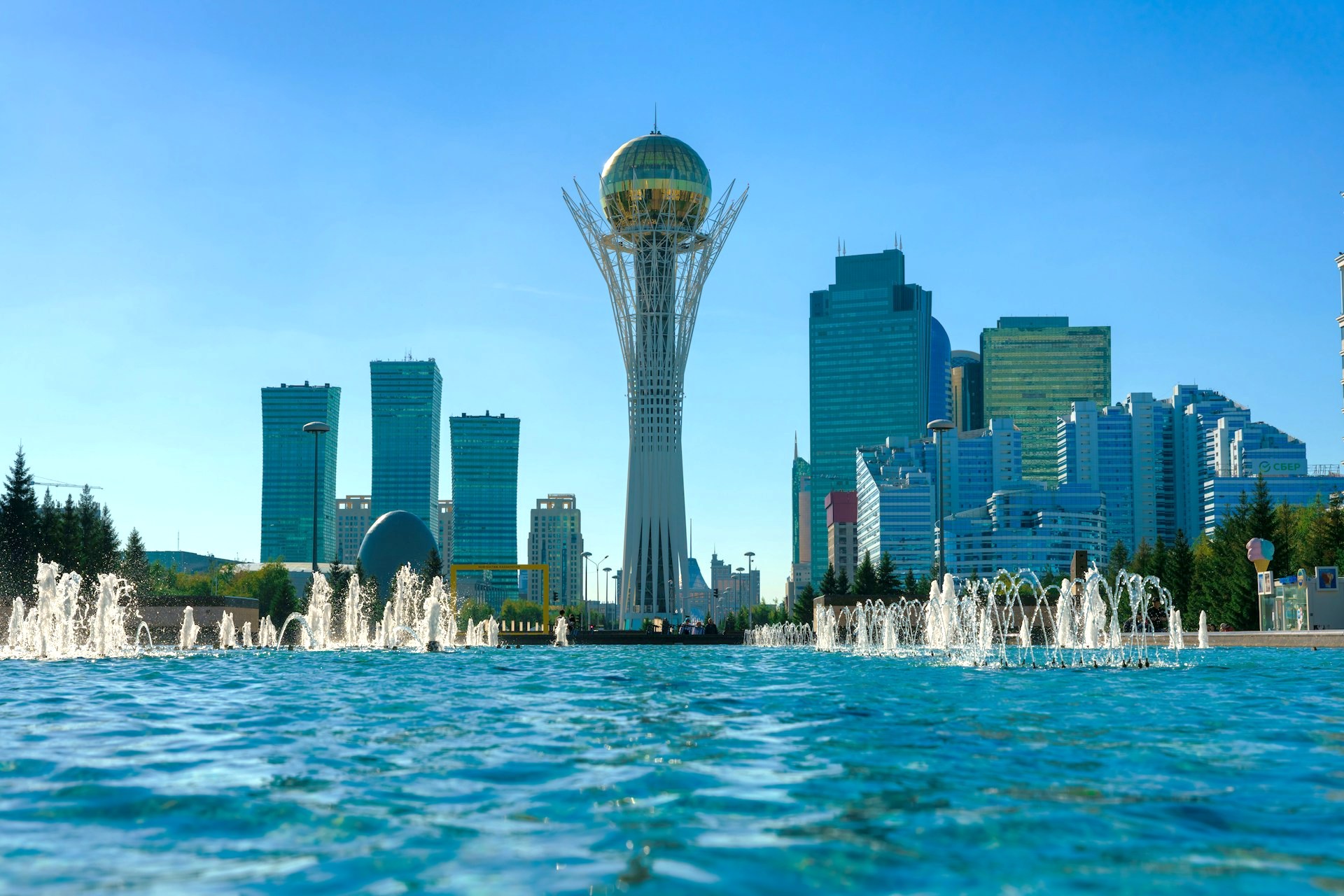
"Bayterek" means a young, strong, growing tree, symbolizing the state, which kept its historical roots and which has the steady support and the aspirations for future prosperity.
Independence Palace is the idea that became a reality of the first President of the Republic of Kazakhstan, Nursultan Nazarbayev. The monumental building, whose architectural features include supporting walls in the form of the Kazakh kerege - the framework of a yurt- became one of the most beautiful architectural structures of Astana. The date when the Palace was opened is December 15, 2008. The mission of such a grand structure is also very important. Astana is the heart of Kazakhstan, where crucial government issues are resolved at different levels. In this regard, the daily arrival in the capital of visitors and delegations from various parts of the world is normal. The Palace of Independence, equipped with everything required, became the venue for official state events, forums, conferences, meetings, and congresses. The capacity of the premises, technical equipment, and comfort allow it to host all events at the highest international level. Along with official events, there are also opportunities for holding concerts, exhibitions, and celebrations.
 Central Asia & Caucasus DMC